
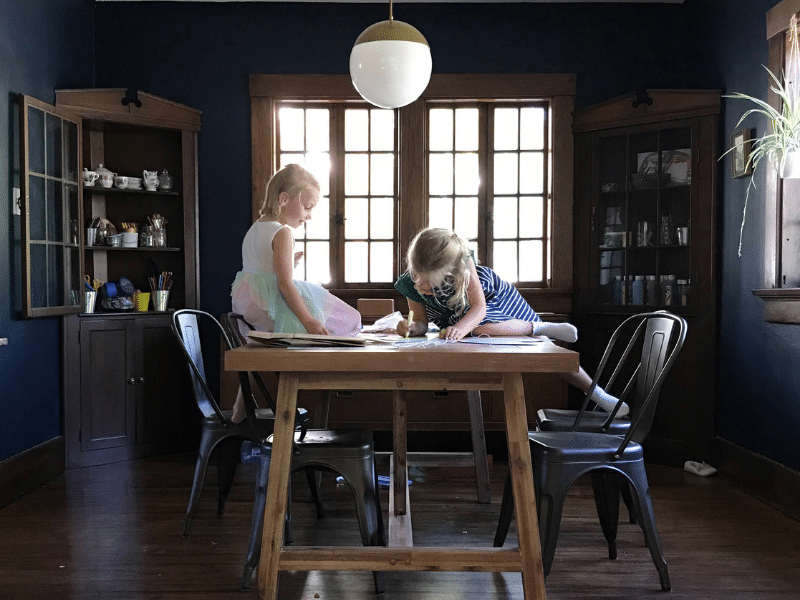
Foster art and creativity with your children with these simple tips and easy ideas for art room set-up in your home.
Updated February 2025
In order to make art, kids have to have a space to do it, even if it’s at the kitchen table.
Dedicated art spaces for kids are great because they are available any time children feel the urge to create, without disrupting the flow of the rest of the house. They are stocked with art supplies and are places that kids can start an art project and come back to work on it the next day if they want to.
But don’t worry if your kids don’t have a dedicated art space – most families don’t!
Here are some tips for creating an art space for your kids, regardless of the size of your home!

Ideas for an Art Room for Kids

1. Set Up an Art Desk
Equip it with paper and drawing materials, adding other materials and tools as appropriate. A nearby shelf or drawer can hold more art supplies.

2. Use an Easel for Kids Art

Young children work best standing up. Whether free-standing, wall-mounted, or DIY table-top made from cardboard, an easel is a great way to give them the opportunity to create this way.
You can leave an easel set up with paper and drawing or painting materials. If the reverse has a chalkboard, equip it with chalk.
If you use an easel, remember to change it up so it doesn’t just become a piece of furniture (and thus ignored).

3. Make Space for Painting
Having a space for painting is great. But if a dedicated painting space is out of the question, consider setting up painting activities periodically.
Use a space that you don’t mind getting messy or that is easily washable (such as the kitchen, porch, garage, or basement). You can also spread a drop cloth or newspapers to catch the paint drips, or simply take the painting activity outside if weather permits.
For more tips on dealing with messy art, check out why messy art is important for kids (and how to embrace the mess)!

4. Take the Art Outdoors
Consider using the outdoors as an art space, especially in the warm weather months. You can set up an easel outside or bring out a table and chair. The bonus with being outside is that you’ll be less concerned about the mess factor. Be sure to check out our favorite outdoor art ideas for kids!

5. Use a Portable Art Caddy
Stock an art caddy, box, basket, or art cart with a pad of paper, some drawing materials, stickers, etc. Keep the caddy within reach so your child can grab it and work whenever and wherever – whether at the kitchen table, the floor, or in the car.
Further Reading: How to Set Up a Kids’ Art Caddy and How to Set Up an Art Cart

6. Set Up a Kids’ Art Room
I know that I’m lucky to have a room dedicated to my kids’ art, especially in a smaller home. If you do have an extra room, consider making it a space for art, creativity, learning, and exploring.
Megan of The Art Pantry turned her enclosed front porch into an amazing art space for her kids. Think outside the box on this one!
And an art room also makes a great play room because having a kids art space isn’t only about art.
It’s wonderful to be able to leave out an art project that is in progress, to have a space that is okay for getting messy, to be surrounded by art materials, and to have a place for drying and displaying art.
By making sure your art space evolves with your kids, you will help ensure a continued interest in making art and exploring the world in creative ways.

More Art Room Ideas & Resources
- 6 Craft Room Ideas for Kids
- Create a Kids Craft Room that Gets Used!
- Set Up an Art Room for Kids That Builds Creative Confidence
- Why a Kids Art Room Isn’t Just About Art
- How to Set Up an Art Caddy
- How to Set up an Art Cart
Pin It for Later


