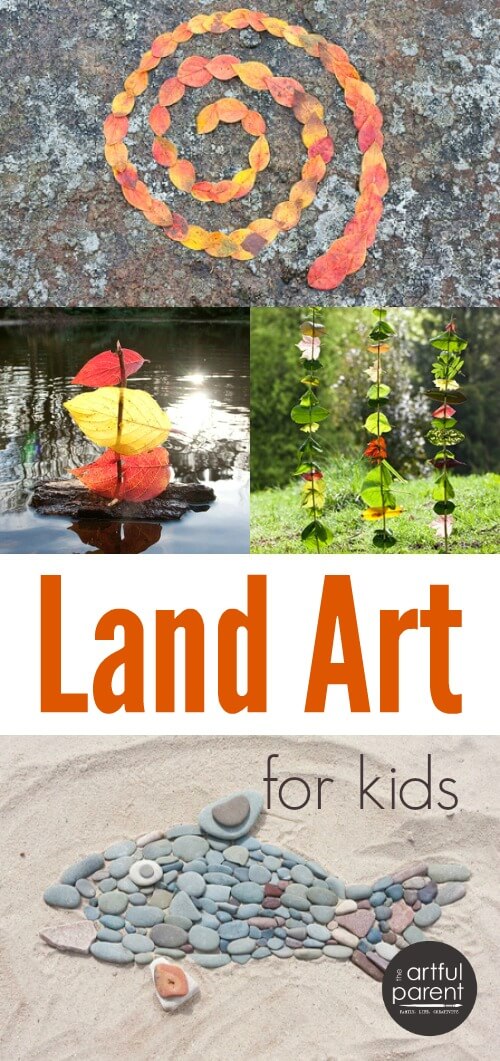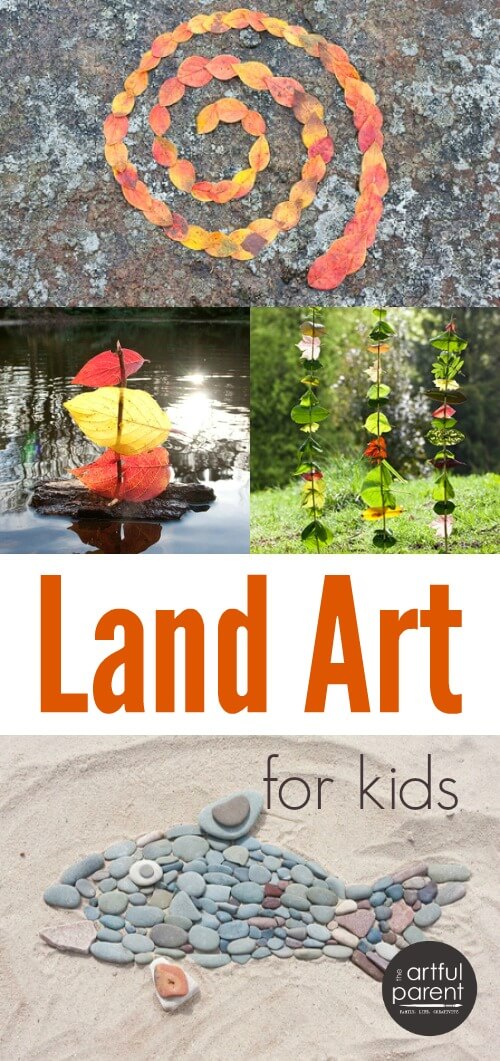
Land art for kids combines playing and creating art in a natural environment using leaves, rocks, sticks, and other nature items as well as light and water.
Updated February 2023
Enjoy this interview Jean had with Richard Shilling, a land artist based in Northern England who encourages children to get outside to see and create art in nature.
And if you’d like more ideas for land art and nature art, visit our post featuring 22 Nature Art Ideas for Kids.
Land Art for Kids
JEAN: Can you tell us a bit about your background? How did you get involved with land art?
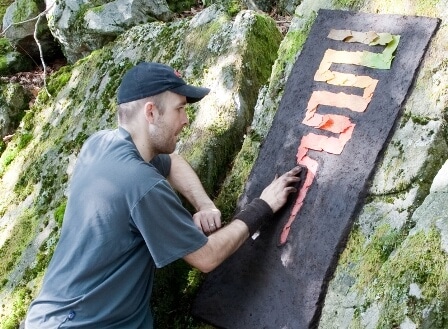
RICHARD: I am a bit of an accidental artist. One day a few years ago I was walking in a wild place near to where I live and discovered an Andy Goldsworthy sculpture in the middle of nowhere. I had no idea what it was, why it was there and what its purpose was and I was really intrigued. I asked around and I was told it was probably made by Andy Goldsworthy. I didn’t
know who he was and so I did some research. I was absolutely amazed at his work! I had heard of land art before and had done a little at school but not for many years. Some part of me was so inspired that I went out one day and started to make my own and it all led from there.
As I explored the world brought to me by Goldsworthy I found it took me over in a completely unexpected way until it became my driving passion and my solace. It has provided me with such a great deal of insight, fun, inspiration and a deep connection to myself and to nature that I now feel driven to try and introduce everyone I can to land art so they can experience those joys just as I have.
JEAN: Can you talk about the ephemeral nature of land art—how does it influence how you view your art?
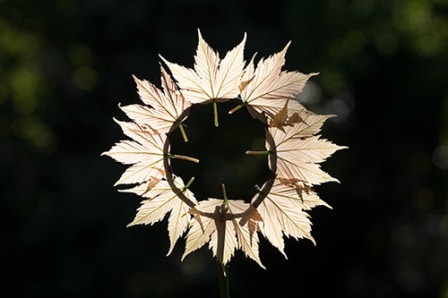
RICHARD: The ephemeral nature of land art really appeals to me. There is a point a sculpture reaches where it is at its most vibrant and it is then that I take the pictures and it is often just before it completely falls apart. There is a tension and vividness revealed through their delicateness. The process is a parallel of life.
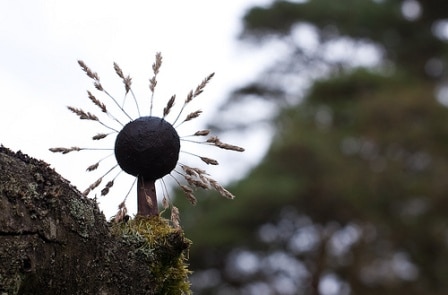
Life creates order and beauty from raw materials and then nature returns everything back to dust once again. Just as I seek to learn about natural places, natural materials I also want to learn about the cycles and processes too and the ephemeral nature of land art helps me do that through learning how things degrade and change.
JEAN: What are you thinking when you’re creating a piece of land art? Can you tell us briefly what the process is for you? And the goal?
RICHARD: The process involves just wandering somewhere without any pre-conceived ideas. I will see a shapely rock or a beautiful leaf and it will inspire me to make something with it. This is no different from anyone who knows and loves nature.

I am sure many of us share the joy of seeing wonderful colours of Autumn or the light glinting on a stream and feel driven to point it out to the people we are with. It is this part that is the
most important. The being there, the feeling, the seeing of nature with open eyes and heart. The making of a sculpture just allows you to immerse yourself even deeper in those things. The goal of all my land art is to open my eyes more fully to what is there by setting myself the challenge of creating something from the materials that I find in a particular place. By going through that process I am always amazed at what more I find and see that was hidden from me when I arrived there.
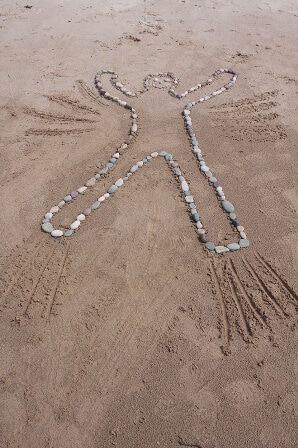
JEAN: What is the difference between children’s land art and adult’s land art? Why do you believe it’s important for kids?
RICHARD: I don’t think there is any difference. As a child I used to run and play in the woods and fields, jump streams and collect tadpoles in a jar and chase butterflies. My land art is the same. Land art for me begins with seeing the world and nature through child’s eyes, I am grateful that it is something I have never lost. Making natural sculptures allows me to indulge a little longer in that child’s world. Whether you are proficient or just dabbling, an adult or a child, making a sculpture or just kicking through fallen leaves, it is all the same to me. It’s all about being outside experiencing all nature has to offer.
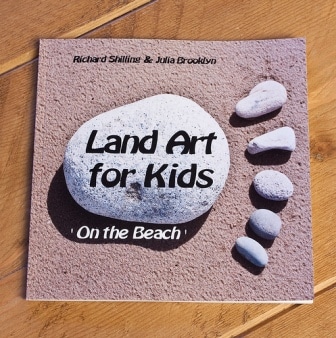
JEAN: What made you and Julia write Land Art for Kids – On the Beach and start this project? What is your overall vision for this project?
RICHARD: When I was a kid we all went out and about exploring places, making dens and generally getting up to mischief. These days there is a growing tendency for kids to sit in front of the TV or computer or for parents to fear for their safety and prevent them from getting outside in all weathers and enjoying healthy, natural activity. I believe that both the physical and mental health of this generation are suffering.

Using land art as a way to get kids out in the fresh air exercising, learning about nature, being creative and having fun can bring so many benefits. Fitness both physical and mental, appreciation of the natural world and so on. Our vision is to do our little bit to encourage everyone we can to get outside enjoying themselves through land art.
JEAN: What tips do you have for parents who would like to introduce this concept to their children and encourage the creation of land art?
RICHARD: As I said, land art is just an extension of natural outdoor play. My advice would be just to open your eyes when out and about and see what you find. Take a closer look at leaves and pebbles and all the interesting things you might find, inspect their colours and shapes and let those things inspire you to make something. That is exactly how I go about things.
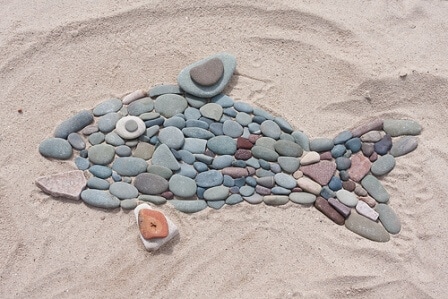
To give you an example:
If I go to to the beach I’ll sit down and look at the pebbles. After a while I might see some pretty red stones, or blue or purple and then I will collect some and make a pattern with them. It’s all about this:
1) Go somewhere and open your eyes
2) Look at what is there and see the colours and shapes and forms
3) Select some materials that appeal to you because of their shape or colour or whatever else
4) Collect as many as you can
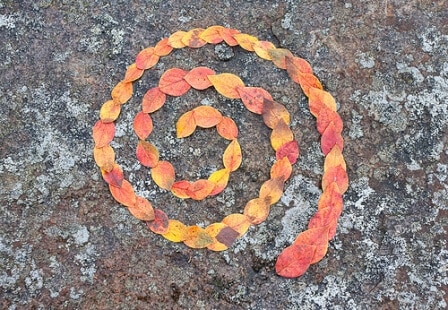
5) Make a pattern, swirl, circle, spiral or anything you like with what you have found
This is exactly what a great many of us do naturally, kids and adults alike, and by behaving in this way you get a better connection with nature, more appreciation of the natural world, calmness from the connection, fun, creativity and play too! What’s not to like!
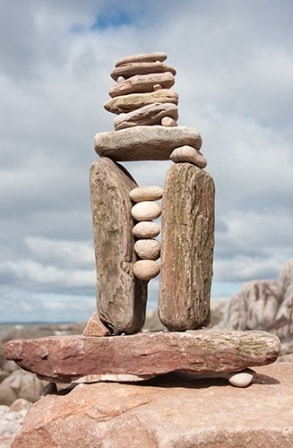
It doesn’t really matter what you create or do, the important part is just getting out there and looking and appreciating what you find. If a ‘how to’ says collect red leaves and there aren’t any then use something else. It’s about feeling the place YOU are in and peeling back the layers of that place, to appreciate it more deeply. That look a child gets in their eyes when they find a crab under a rock – that is what it is all about! If a leaf inspires you to make something then great, but if not, no matter. It is the opening of your eyes, ears and heart, the exploring that is important. But by making land art you get that immersion into the environment for free and all the advantages that go with it.
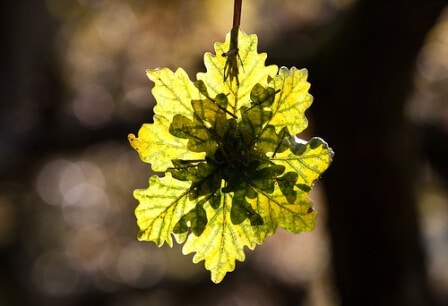
JEAN: What’s a simple land art project we could all do with our children today in our backyard or neighborhood park?
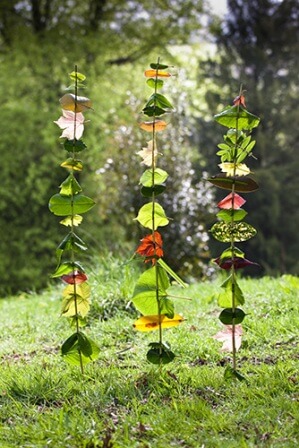
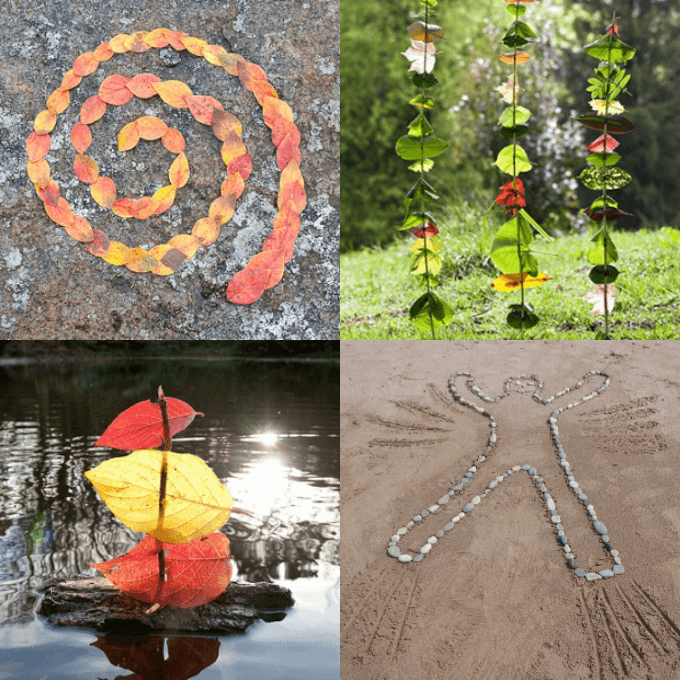
RICHARD: Collect 10 (or more) different leaves
1) Explore wherever you are and collect one leaf from each different plant you can find (beware of poison ivy!)
2) Examine each leaf and see the different colours, thicknesses, vein structures and so on
3) Lay your leaves out on the ground or thread them onto sticks to display them
JEAN: I’d love to hear your thoughts on the importance of documenting your land art through photography. And, do you encourage children to photograph their land art?
RICHARD: Photography to me is very important and my photographic ability has developed hand in hand with my natural art abilities. The sculptures are captured in a photograph at their
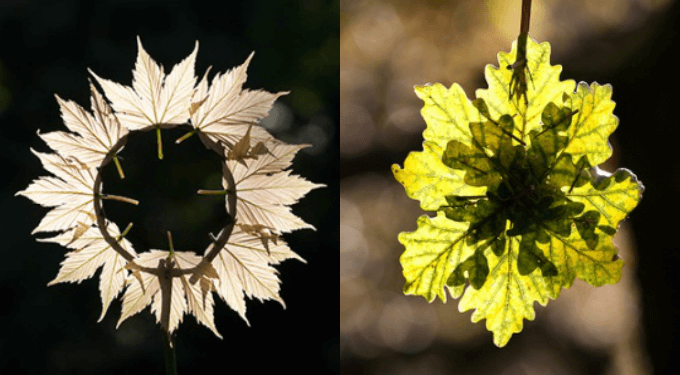
most vital moment. For the most ephemeral works no-one would ever see the results without photography and light is an important element of my artwork.
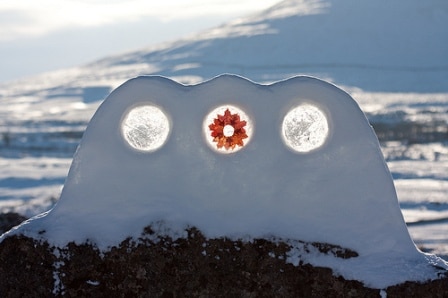
The last thing I made is a good example, on the day I made it the light wasn’t right for the concept but the day after it was perfect. Even if someone finds a sculpture they wouldn’t necessarily see it as it was intended as the light may have changed or they might be looking from the wrong angle. I try and bring all the elements together – materials, colour, light, time of day etc – and the only way to do that and show people is either for them to be standing behind me or to capture each sculpture in a photo or on film.
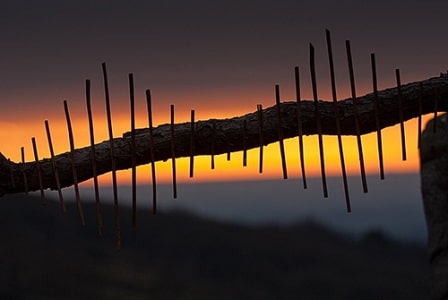
An analogy I use for making ephemeral art is it is like paddling a raft down a ravine. As you travel further the river gets thinner and more turbulent and the walls of the ravine close in until there is no way to turn back. Making very fragile sculptures feels the same. Some of them are very fragile and fall apart quite easily and the photo traps it in time.. I find that once a sculpture reaches a certain point I am desperately trying to finish it and hold it together long enough to get the picture whilst the wind and elements are trying to destroy it.
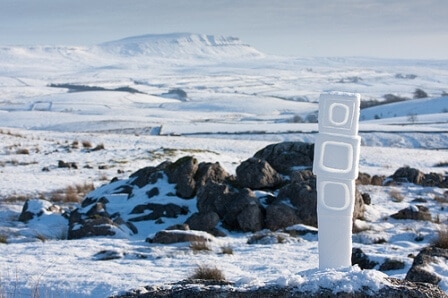
So that vital moment that I try to photo is just that, the culmination of all the work and also the conditions, quality of light and so on. It is more than just a picture of what I have made. I think there are many parallels with life in this approach. Throughout nature order is brought from chaos and then returned back to chaos. Ephemeral art mimics that quite distinctly and reveals to you lots about how things grow and subsequently decay.
As for kids photographing what they have made then definitely! For all the same reasons I have waffled about above but also for sharing. The other aspect of what I do is share it on Flickr and my blog the same day that I make something. I do that almost without fail. So my process is – go somewhere, explore, get inspired, make something, photograph it at just the right time so that more is brought into the photo and then share my experience (both the photo and the story of what happened) straight away on the internet. I think sharing is very important and would be very pleased if anyone wants to show me what they have made. I have Flickr groups set up for this purpose.
JEAN: What’s next? Is there another children’s book in the works yet?
RICHARD: Yes there is. Next we are working on Land Art for Kids – In the Woods and that will be available in the next couple of months, then following that up with ‘Park and Garden‘ and ‘City and Schoolyard‘. Land art can be done absolutely anywhere however urban the place you live. Plants are everywhere and it can be even more fascinating discovering plants that grow in unexpected places amongst the concrete of the inner city.
JEAN: Anything else you’d like to add?
RICHARD: All that I have said above (and more) is on https://LandArtforKids.com. Explanations of the how, why, where and what and dozens of easy how to’s. This and all the the land art we do is done in our spare time so we are trying our best to add more all the while. But if anyone has any suggestions or feedback or would just like to tell us about the fun you have had then we would love to hear about it!
And thanks to Jean for hosting this interview. We are much obliged!
JEAN: Thank you, Richard! I love the combination of art and nature—what wonderful work you do! And I think it’s fantastic that you are sharing your ideas with children.
To order the book, Land Art for Kids—On the Beach, click here.
Pin It for Later